
English

French

Italian

Portuguese

Spanish
A screw conveyor is mainly used for feeding, transporting, and conveying materials, which is a special type of conveying device. In order to achieve the purpose of feeding, transporting, and conveying materials, it needs to be equipped with a feeder and a motor..
Screw Conveyors were invented by Fredrik Idestam in 1871, who had started with pulleys before switching over to screws. Idestam called his invention “rotary friction wheels”.
The material feeding device has a certain degree of flexibility in matching different shapes and sizes of materials. Therefore, it can be widely used in various industries such as mining, smelting, food industry, chemical industry, and other industries.
The screw conveyor consists of a shaft that revolves around its axis; its surface is made up of several parts consisting of a spiral groove or helix groove on each part. When the shaft rotates, the material conveys from one end to another end through the spiral grooves or helix grooves by means of friction force generated between the material surface and the spiral groove or helix groove.
There is a hopper at the top of the screw conveyor. It can be used to feed raw materials directly into the machine, or it can be used to feed pre-mixed raw materials into the machine.
The main body of this machine is formed by rotating spiral steel plates and screws arranged in an orderly manner along its axis, which is driven by a motor through a gearbox and reducer to rotate continuously at high speed. When these screws rotate, they will generate centrifugal force along their length, which will push out slurry from the gap between each screw and its shaft. This process is called the extrusion principle, which makes it possible for solid particles to move forward while liquid ones remain stationary.
The material will start moving forward when it reaches the discharge end of the screw conveyor, where it’s discharged from outlet ports onto belt conveyors or other material handling equipment such as bucket elevators or bucket hoists for further processing.
A screw conveyor is a kind of belt conveyor, but its working principle is different from that of a belt conveyor. The screw conveyor consists of an endless screw and a nut. The screw rotates in the direction indicated by the arrow, and the nut moves along with it.
The most important feature of the screw conveyor is its efficiency. It is possible to achieve a very high level of throughput with screw conveyors due to their ability to maintain constant throughput rates under varying conditions. The main features of screw conveyors include:
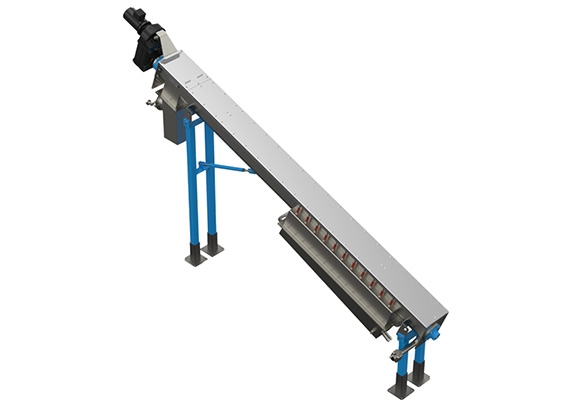
A screw conveyor is a continuous system that moves material from one place to another. The conveyor consists of a rotating helix with a central drive shaft that fits into a tube or pipe. There are two main types of screw conveyors: horizontal and vertical.
In a horizontal screw conveyor, the material is fed into the entrance of the screw and transported along the length of the screws. In this type of conveyor, the material is pushed forward by rotating threads on either side of the material.
In a vertical screw conveyor, there is only one thread that pushes material down from above. This type of machine has many different applications including moving grain or other agricultural products from silos or storage bins into trucks or rail cars for transport.
Install the screw conveyor according to the instructions provided by the manufacturer. If you want to make sure that your conveyor is installed correctly, check with someone who has experience with conveyors.
In addition, if there are several screws on each side of the pulley, they should be arranged evenly. If there are many pulleys on one side, it is best to install them at 90 degrees to each other so as not to affect their performance after installation.
When using a screw conveyor, you’ll need to consider whether you want to move your material uphill or downhill. If your site has a slope, then you’ll want to consider how steep it is before deciding where to place your conveyor system.
The incline is one of the most important factors when designing any type of system that uses conveying equipment such as screw conveyors, belt elevators, or bucket elevators. You should always try to design your system with an inclination that is as close as possible to horizontal so that you can avoid having any sort of problems with your material.
However, if you have no choice but to use an incline with a screw conveyor system, then it’s important that you know how much material will be moving through it and how much weight each section of pipe can hold before making any adjustments.
The next step in using a screw conveyor is adjusting its height so that it matches whatever height you need it at inside your facility or building. You may need multiple screws on different levels depending on how much space you have available and what kind of equipment you’re using with them.
Adjust the screw conveyor height according to the material to be conveyed. For example, when conveying granular materials, adjust the screw conveyor height to 0.3m above the ground. When conveying liquid materials, adjust the screw conveyor height according to the liquid level in the tank.
After you have assembled your screw conveyor, it is time to start using it. However, before you can begin moving bulk materials, you must make sure that everything is in place and ready to use. This includes making sure that all of your screws are in good condition and that all of your belts are on correctly. You also need to make sure that any pulleys or sprockets are properly aligned and functioning smoothly.
You should also check for leaks in any bearings or seals. If there are any leaks, you will need to replace them immediately before they cause damage to other parts of the machine or cause some sort of accident with dangerous consequences for yourself or others around you.
If you still don’t know how to use the stainless steel screw conveyors, please feel free to contact Sunrise. As a rendering plant machine manufacturer, Sunrise has rich experience and provides long-term and professional service for you.
Generally, a Screw Conveyor uses the principle of squeezing and pressing to move materials from one end of the conveyor to the other. It is the main technical process, with the function of material transport in the whole production process.
Screw conveyors are one of the most important components in material handling, utilities, food, and chemical industries. So far screw conveyor has become essential parts of various plants, which is why some people call them ‘plant blood’. Sunrise has made a lot to create an ideal production that offers you the best components, so Sunrise can meet your requirements and even ideas about new products.
--END--
December 19, 2025

October 24, 2025

October 9, 2025
 English