
English

French

Italian

Portuguese

Spanish
In the rapidly evolving landscape of advanced technology, the Ionization Tower stands as a testament to human ingenuity and innovation. These towering marvels harness cutting-edge ionization technology, promising groundbreaking solutions to age-old challenges. As society seeks sustainable and efficient methods to address complex issues, understanding the Ionization Tower’s significance becomes pivotal. Join us on a journey through the realms of advanced technology, where these towers redefine possibilities and offer a glimpse into a future where innovation knows no bounds.
Early Investigations and Discoveries
Ionization technology finds its roots in the late 19th century when scientists embarked on explorations into this captivating realm. In the 1880s, Wilhelm Conrad Roentgen’s groundbreaking discovery of X-rays marked the inception of our understanding of atom ionization through radiation. Roentgen’s pioneering work laid the foundational stone for further investigations into manipulating ionized particles.
Progressive Development of Ionization Technology
Over subsequent decades, researchers made substantial advancements in comprehending ionization processes. The advent of vacuum tubes and the emergence of mass spectrometry in the early 20th century signified a refined ability to control ionized particles. These early experiments served as a precursor to the eventual evolution of sophisticated ionization technology.
Innovative Visionaries and Scientists
The concept of Ionization Towers, as we recognize them today, began taking shape in the mid-20th century. Visionaries such as Enrico Fermi, John Cockcroft, and Ernest Walton played pivotal roles in propelling ionization technology forward. Fermi’s groundbreaking work in nuclear reactions and Cockcroft-Walton’s revolutionary particle accelerator were instrumental in pushing the boundaries of ionization research. These trailblazers paved the way for the eventual development of ionization towers by demonstrating the controlled manipulation of ionized particles.
Noteworthy Progress and Breakthroughs
The 20th century bore witness to remarkable strides in ionization technology. Among the notable breakthroughs were the development of cyclotrons and linear accelerators, enabling the acceleration of particles to high energies. These advancements found applications in diverse fields, including nuclear physics, medical diagnostics, and materials science.
As the late 20th and early 21st centuries unfolded, ionization technology experienced a resurgence in interest, marked by fresh breakthroughs in areas such as ion mobility spectrometry, mass spectrometry, and applications in environmental science. These advancements paved the way for the creation of Ionization Towers capable of executing precise and controlled ionization processes, thereby opening up a broad spectrum of applications across various industries, encompassing agriculture, manufacturing, and environmental remediation.
An Ionization Tower is an innovative device designed to effectively neutralize pollutants present in the air. Operating by guiding air through a chamber containing an electric field, this apparatus induces the ionization of airborne contaminants. These charged pollutants are then efficiently captured by oppositely charged plates or specialized media, resulting in their removal from the air. Furthermore, Ionization Towers extend beyond industrial applications for emissions control; they find utility in diverse environments, enhancing indoor air quality.
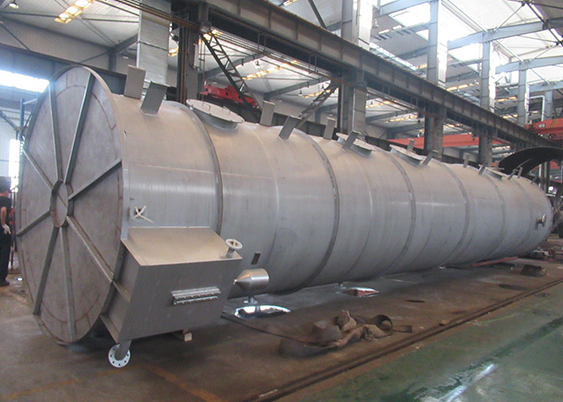
Overview of Key Components
Ionization Towers are instrumental in efficiently purifying waste gases across various applications. They achieve this through a series of meticulously engineered processes:
The Ionization Tower typically features a dual-stage structure comprising essential components such as the tower body, cathode line, anode tube, packing layer, support plate, atomization spray system, demisting system, and air extraction system. This intricate design ensures optimal performance and pollutant removal.
Ionization Towers hold significant relevance in various industrial settings, including the Feather Meal Project, Meal Plant & Fat Plant, and Rendering Plant. These devices offer a range of advantages, such as:
Latest Innovations and Breakthroughs
Ionization Towers have witnessed remarkable recent innovations and breakthroughs, making them even more potent in various applications. Some notable developments include:
Research and Experimentation in the Field
Ongoing research and experimentation in ionization technology continue to push the boundaries of what Ionization Towers can achieve. Scientists and engineers are exploring:
Potential Drawbacks and Hurdles
Despite their advancements, Ionization Towers still face certain challenges and limitations:
Ongoing Research to Address Limitations
To overcome these limitations, ongoing research is focused on:
Predictions for the Future of Ionization Towers:
Potential Uncharted Applications:
Impact of Advanced Technology on Society
The proliferation of Ionization Towers brings forth ethical concerns, including data privacy and security, particularly within smart, AI-driven systems. Equally important is addressing issues of equitable access to clean air and ensuring that technology complements, rather than substitutes, sustainable practices.
Environmental Responsibility and Sustainability
While Ionization Towers can be instrumental in addressing air quality challenges, there is a vital need to assess their environmental impact. Prioritizing strategies to minimize energy consumption, curtail ozone emissions, and implement responsible disposal methods for tower components is essential for the long-term sustainability of these systems.
Regulations Guiding Ionization Technology
With the increasing prevalence of Ionization Towers, regulatory bodies will play a pivotal role in establishing and enforcing standards to ensure the safe and effective operation of these devices. These regulations may encompass ozone emission limits, safety protocols, and quality control measures.
Ensuring Safety and Responsible Usage
Both manufacturers and users must maintain a commitment to safety by adhering to proper installation practices, conducting routine maintenance, and carrying out periodic inspections. Public awareness campaigns can further educate users about the safe and responsible utilization of Ionization Towers, addressing potential health and safety concerns.
The future of Ionization Towers teems with potential for cleaner air and improved well-being, but it necessitates a thoughtful and responsible approach, encompassing ethical considerations, environmental stewardship, and prudent regulation to maximize their positive impact on society and the environment.
The Ionization Tower represents a pinnacle in advanced technology, offering an innovative solution to environmental challenges. Its design integrates cutting-edge ionization methods to purify air, symbolizing a leap forward in sustainable engineering. This tower not only exemplifies technological advancement but also reflects a commitment to ecological responsibility, paving the way for future innovations that harmonize human progress with environmental preservation.
--END--
December 19, 2025

October 24, 2025

October 9, 2025
 English